
"uneven beans"
4000 article(s) found

What are the factors to consider when choosing raw coffee beans?
The raw bean seller is mainly responsible for grading the coffee beans before selling them to the coffee bean merchant.
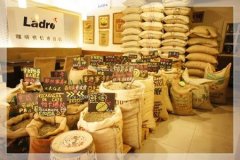
Factors to be considered when choosing raw coffee beans
You can see how carefully coffee beans are processed by observing their appearance. Here are 10 factors to consider when choosing raw coffee beans.
Selection and purchase of raw coffee beans
How to buy raw beans? What kind of raw beans are good raw beans?

How to eliminate the astringency of coffee? is there any coffee that is not astringent? The coffee made by oneself is astringent.
Professional coffee knowledge exchange more coffee bean information please pay attention to the coffee workshop (Wechat official account cafe_style) coffee oil and gelatin in the mouth to create a smooth taste, but the coffee's polyphenol compounds will produce a rough astringency. Although astringency is an important taste of wine, coffee has an astringent feeling, like an ugly devil's tail, which is wild in the mouth.
10 factors to consider when choosing raw coffee beans
Although Cupping is undoubtedly the clearest way to check coffee beans, you can still see how carefully coffee beans are processed by looking at their appearance.

Flavor description of Ethiopian boutique coffee beans introduction to the taste and origin of grinding scale varieties
Flavor description of Ethiopian boutique coffee beans grinding scale varieties taste origin introduction of how many Arabica subspecies there are in Ethiopia, even the official research unit of Ethiopia does not know. The coffee cooperatives in this mountain are certainly different from those planted in another mountain, and even small farmers in the same region grow different varieties of coffee. Some people estimate that Ethiopian coffee arrives
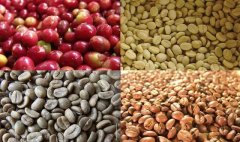
How are Ethiopian coffee beans graded?
The grading we are talking about now refers to the grading of raw beans in the country where coffee is produced. (no matter which country coffee beans are not graded) Ethiopian coffee beans are divided into five grades. The first and second stages are reserved for washing beans with water. Grade 1 represents 0-3 raw beans and Grade 2 represents 4-12 missing beans per 300g raw beans. Grade 1 (G1) grade water washed bean pole

How should I make coffee by hand? What are the factors that affect hand-made coffee?
Professional coffee knowledge exchange more coffee bean information Please follow the coffee workshop (Wechat official account cafe_style) usually make their own coffee at home, even if it has a bad taste, I do not know why this occurs, or how to adjust it. So the Qianjie Coffee Club advises you to write down the parameters of your own brewing each time you make it.

The brewing principle of Italian coffee-coffee basics
First, the relationship between brewing time and grinding filling time If the grinding is too fine and the filling pressure is too concentrated, the resistance is too large, the hot water is not easy to penetrate the coffee powder, which will make the extraction time of coffee too long, and the water in the coffee powder for too long will cause excessive extraction.
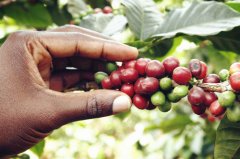
Ten key points in the selection of raw beans selection of coffee beans
Here are 10 factors to consider when choosing raw coffee beans: 1. The size of raw beans should be very similar. The appearance must be as consistent as possible, and the color should be similar. This project determines the color uniformity after baking and the difference in taste after baking. For example, 17DB 18, 15ax 16, 13b 14, etc., because beans with smaller grains are associated with
Notes on the purchase of coffee and raw beans
Sellers of raw coffee beans are mainly responsible for grading coffee beans before selling them to coffee bean sellers. After the grading is completed, premium coffee beans and boutique coffee beans will be selected, although they will have some defects but do not affect the coffee rating.
Coffee Encyclopedia beans and grading of Ethiopian Coffee
The grading we are talking about now refers to the grading of raw beans in the country where coffee is produced. (no matter which country coffee beans are not graded) Ethiopian coffee beans are divided into five grades. The first and second stages are reserved for washing beans with water. Grade 1 represents 0-3 raw beans and Grade 2 represents 4-12 missing beans per 300g raw beans. Grade 1 (G1) grade water washed bean pole

Common extraction problems in the production of espresso Starbucks espresso often makes mistakes
The exchange of professional baristas please pay attention to the problem of Italian concentrated extraction mentioned in the last part of the coffee workshop (Wechat official account cafe_style). The following are more common examples: overextraction (Over-extraction) must first understand the concept of extraction rate, according to VST Coffee Refractometer (special refractometer for coffee, officially designated measurement for a number of coffee international competitions.

10 Things to Consider Before Buying Coffee
Green coffee sellers are primarily responsible for grading coffee beans before selling them to coffee merchants. After grading, premium coffee beans and specialty coffee beans are selected, although they may have some flaws that do not affect the coffee rating. These flaws are less severe, but they can potentially damage coffee quality. Although Cupping is undoubtedly the clearest way to check coffee beans
Types of coffee grinder
1. The ancient house bean grinder is also called the three-sided bean grinder, which is a hand grinder with soft wood grain. If the rotation speed or force of the handle is uneven, the coffee beans after grinding will be uneven. It should be noted that this bean grinder is characterized by fast grinding, uniform thickness and adjustable thickness. How to operate: put the coffee beans in the upper container, gently shake to the handle, grind the coffee.
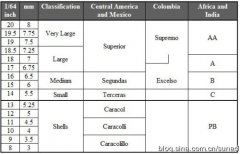
10 factors to consider when choosing raw coffee beans
The raw bean seller is mainly responsible for grading the coffee beans before selling them to the coffee bean merchant. After the grading is completed, premium coffee beans and boutique coffee beans will be selected, although they will have some defects but do not affect the coffee rating. These defects are not so serious, but they can also cause potential damage to the quality of coffee. Although Cupping is undoubtedly the most definite way to check coffee beans.

Basic knowledge of coffee bean appearance and grading of Ethiopian coffee
The grading we are talking about now refers to the grading of raw beans in the country where coffee is produced. (no matter which country coffee beans are not graded) Ethiopian coffee beans are divided into five grades. The first and second stages are reserved for washing beans with water. Grade 1 represents 0-3 raw beans and Grade 2 represents 4-12 missing beans per 300g raw beans. Grade 1 (G1) grade water washed bean pole
Selection and purchase of raw coffee beans (industry)
How to buy raw beans? What kind of raw beans are good raw beans? Raw bean sellers (usually coffee farmers or processing plants that deal with raw beans) must be responsible for the grading of coffee beans before they are sold to buyers (usually importers, brokers, or bean merchants). Once the grading is completed, the two grades of coffee are "Exceptional" and "Specialty".
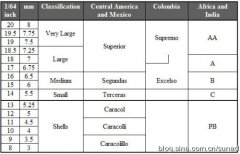
10 factors to consider when selecting raw coffee beans
The raw bean seller is mainly responsible for grading the coffee beans before selling them to the coffee bean merchant. After the grading is completed, premium coffee beans and boutique coffee beans will be selected, although they will have some defects but do not affect the coffee rating. These defects are not so serious, but they can also cause potential damage to the quality of coffee. Although Cupping is undoubtedly the most definite way to check coffee beans.
Coffee Bean knowledge Coffee Raw Bean
Sellers of raw beans (usually coffee farmers or processing plants that deal with raw beans) must be responsible for the grading of coffee beans before they are sold to buyers (usually importers, brokers, or bean merchants). Once the classification is completed, there will still be some coffee beans of "Exceptional" and "Specialty" that will not be included in the classification.